Marathonisi Cave and Turtle Island: What to See and How to Visit
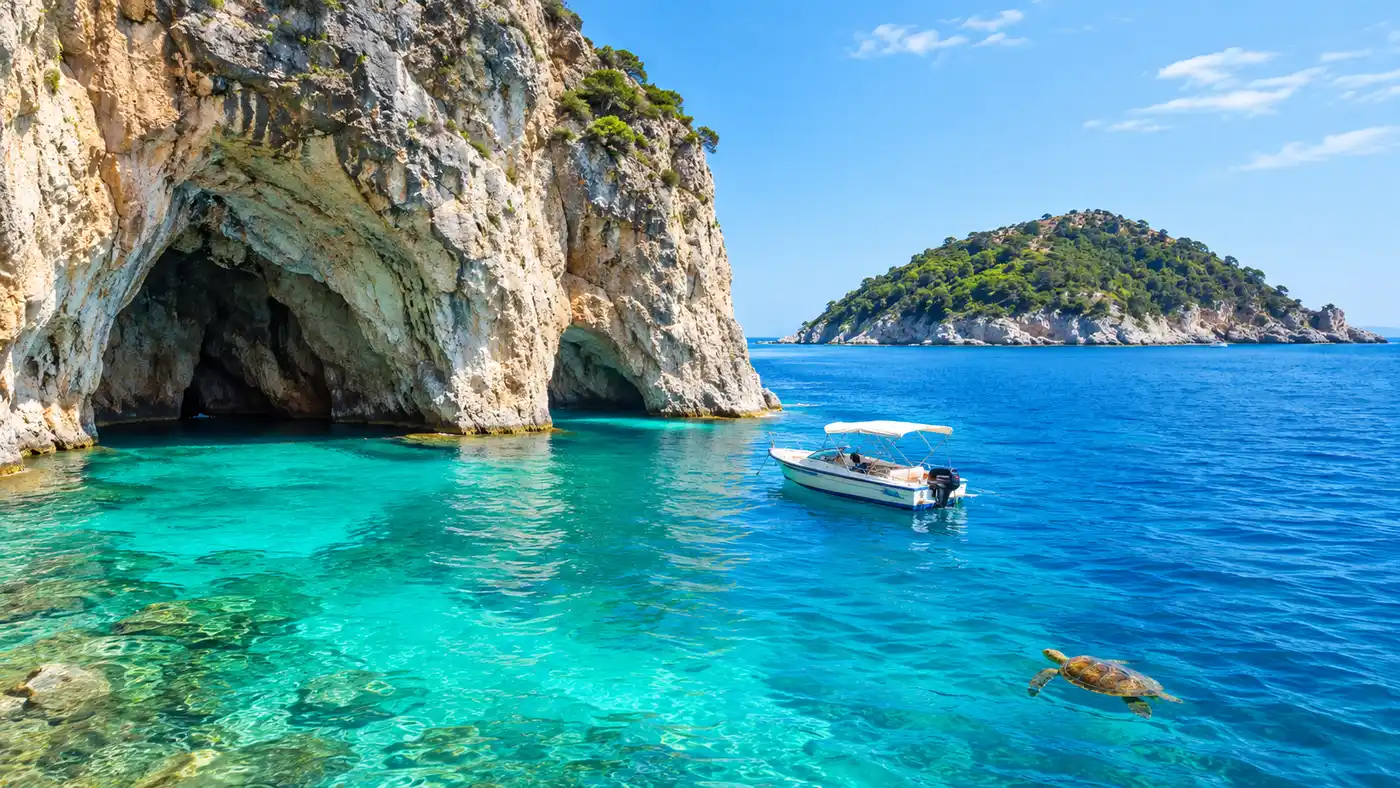
Marathonisi floats in the middle of Laganas Bay like an escaped green shell. People call it Turtle Island for two reasons. Seen from the hills of Keri, it mimics the silhouette of an enormous sea turtle floating asleep on the surface of the Ionian Sea. More importantly, its pale sand spit serves as a nursery for endangered Caretta caretta turtles, who drag themselves ashore on warm summer nights to dig their nests. Most day-trippers drop anchor at that front beach, take three photos, and leave. They miss the southern flank entirely, where sheer limestone walls drop straight down into sapphire water to conceal the entrance of the primary marathonisi cave.
Paddling or motoring along that outer wall feels completely different from the busy resort beaches across the bay. The midday sun turns the stone a blinding chalk white, while the sea below swings through every shade of turquoise before dropping off into deep indigo. Visiting Marathonisi is straightforward if you know your options, but poorly planned trips usually mean getting stuck in diesel fumes behind a massive wooden excursion ship. If you want to explore the grottoes, swim into the dark rock chambers, and actually enjoy the trip without stressing over park rules, a little local context goes a long way.
Book your keri caves experience:
Understanding the Island and the Marathonisi Caves
The island is uninhabited. Nobody lives there, nobody runs a taverna, and you will not find sun loungers lined up for rent. Marathonisi sits firmly inside Zone B of the National Marine Park of Zakynthos, an environmental protection zone established back in 1999 to save Mediterranean loggerhead turtles from extinction. Because of this protected status, human presence is heavily restricted. You are only allowed on the narrow sand spit during daylight hours, and even then, only within five meters of the waterline.
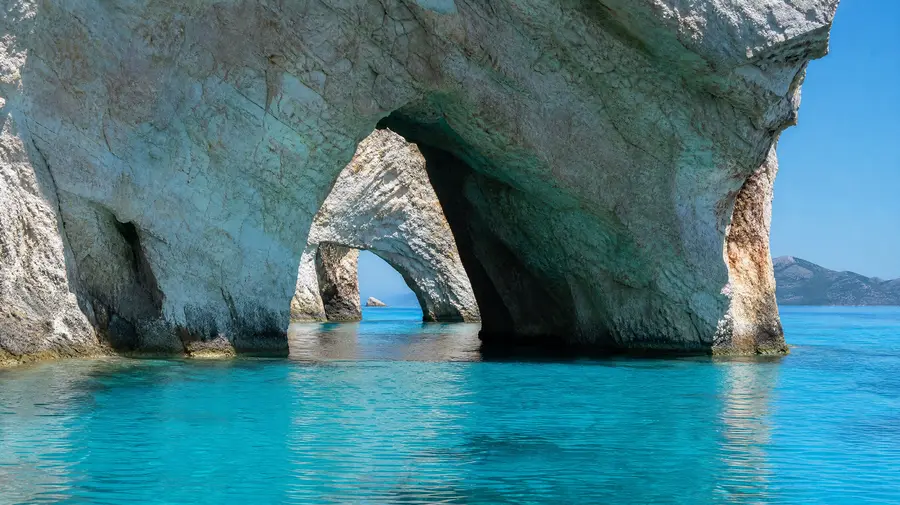
The geography splits the island into two distinct worlds. The side facing mainland Zakynthos features a shelving sand spit that tapers off into shallow, warm water. It is postcard material, but it gets packed by 11:00 AM. The opposite side faces open water. Here, the landscape changes violently into towering cliffs pitted with natural arches, deep overhangs, and sea grottoes. The largest cavern, often called the main marathonisi cave, features a high, domed mouth wide enough for small runabouts to poke their bows inside, though swimming in remains the far better choice.
Next to the primary cavern sits a smaller crack in the cliff that many travelers overlook. Locals often refer to this entire rocky stretch as the marathonisi caves because sea action has hollowed out several small pockets along a 300-meter stretch of stone. Some are merely waist-deep shelves carved under the cliff, while others open up into gloomy hollows where cool air pushes out against the summer heat. Exploring these pockets reveals sea sponges clinging to submerged rock shelves and schools of striped sea bream hovering in the shadows.
Inside the Marathonisi Cave: Swimming and Snorkeling
The water outside the cave looks like blue glass on a calm morning. When you slip off the side of a boat and swim toward the archway, the temperature drops almost instantly by three or four degrees. Freshwater springs seep through the porous limestone from deep underground, creating an oily-looking thermocline on the surface where warm saltwater and cold freshwater mix. It looks blurry through a diving mask until you kick down two meters into the clear brine beneath.
Inside the main cavern, the ceiling rises high above your head, damp and stained with minerals. The acoustic echo is eerie. Every small wave slapping the back wall sounds like low thunder. The bottom drops to roughly 5 meters near the mouth before sloping gently upward toward a dark pebble shelf tucked into the far recess. Light streams through the wide opening behind you, illuminating the white sand floor and turning the interior water into an electric neon blue. Swimming here feels like floating inside an illuminated dome.
Pro tip: Bring a small floating dive torch if you have one. The back chamber goes deeper than the midday sunlight reaches, and looking back out toward the entrance while submerged shows an intense cobalt glow you cannot see from the surface.
Marine life gathers along the threshold where shade meets light. Look for red starfish clinging to the rock face, solitary brown groupers watching from floor crevices, and small painted combers darting among the weeds. Turtles rarely swim inside the actual caves - they prefer sleeping on the seagrass beds out in the open bay - but you will frequently spot them surfacing for breath just fifty meters off the rocky point. If you want to combine this cavern with a longer coastline adventure, consider extending your trip down the peninsula, which we cover in our guide to Keri Caves boat tours and excursions.
How to Reach Marathonisi Cave: Weighing Your Transport Options
Getting to the island requires a boat. You cannot hike there, and swimming across from the mainland is dangerous because of heavy boat traffic in the channel. Your departure points are usually Limni Keri, Laganas, or the small harbor behind Cameo Island at Agios Sostis. How you get there dictates whether you can actually explore the caves or just stare at them from 40 meters away.
Renting a self-drive motorboat gives you absolute freedom. In Greece, you do not need a maritime license to rent a boat with an engine up to 30 horsepower. The rental outfit gives you a quick 10-minute briefing on steering, dropping anchor, and operating the throttle, then hands you the keys. Having your own boat means you can reach the caves at 8:30 AM before the tour boats start their engines, anchoring right outside the arch in calm water.
The second option is an organized tour, typically on a glass-bottom boat or a medium-sized wooden catamaran. These tours usually bundle Marathonisi with turtle spotting in the bay and a swing past the Keri cliffs. The downside is rigid scheduling. The skipper will pause outside the marathonisi cave for five or ten minutes so passengers can snap photos from the deck, but you rarely get enough time for a proper swim inside. The third route is a simple water taxi from Limni Keri beach, which charges a fixed round-trip fare to drop you on the sandy beach of Marathonisi. Keep in mind that a standard water taxi drops you on the sand spit and leaves; it will not take you around the cliffs to the caves.
| Option | Approx. Cost | Cave Access | Schedule Control | Best Suited For |
|---|---|---|---|---|
| Self-Drive Motorboat | €80 - €140 + fuel | Direct swim access | Full independence | Couples & confident drivers |
| Glass-Bottom Group Tour | €20 - €35 per person | Photo pause only | Strict 2-3 hour tour | Families with young kids |
| Beach Water Taxi | €12 - €18 per person | No (beach only) | Pre-arranged pick-up | Budget beachgoers |
| Private Skippered Charter | €180 - €290 for half day | Direct swim access | Customizable route | Small groups wanting ease |
Fuel costs for self-drive boats are paid separately at the end of your rental based on liters consumed. A typical morning run from Limni Keri to Marathonisi and along the cliffs burns about 12 to 18 liters of petrol, which usually adds around €25 to €38 to your base rental price. Always inspect the propeller with the rental staff before you leave the dock so you are not blamed for existing nicks or dings.
Book your keri caves experience:
Navigating the National Marine Park Rules Around Marathonisi Cave
Laganas Bay is not a free-for-all maritime playground. The National Marine Park enforces strict zoning laws aimed at shielding the Caretta caretta population from boat strikes and habitat destruction. Speed limits are strictly monitored, and wardens patrol in rigid-inflatable boats throughout the day.
- Speed restriction: keep boat speeds below 6 knots across the entire bay, especially when passing the shallow channel between Marathonisi and Cameo Island.
- Restricted nesting areas: on the front sand beach, never cross the rope barriers or walk beyond the line of wooden cages marking turtle nests.
- Prohibited beach umbrellas: do not bring your own sun umbrellas to poke into the sand, as sharp points easily pierce shallow turtle egg clutches.
- Anchoring limitations: avoid dropping metal anchors onto dark green patches of Posidonia oceanica seagrass meadows; seek out white sandy patches instead to prevent tearing up the seabed.
- Time on the sand: beach visits are formally capped at three hours per person to minimize overall footprint on the nesting ecosystem.
Note: Park wardens actively patrol in small dinghies. If you cross the roped nesting boundary on the beach or rev your boat engine near a surfacing turtle, expect a loud whistle, an embarrassing reprimand, and potentially a stiff fine.
When you see a sea turtle in the open water near Marathonisi, the natural urge is to steer right toward it. Do not do that. Boating etiquette requires cutting the engine to neutral immediately if a turtle surfaces within 15 meters of your vessel. Never chase them, never touch their shells, and never circle them with multiple boats. If two other boats are already watching an animal, keep your distance and wait your turn or move on toward the cliffs.
Best Time of Day to Visit Marathonisi Cave and Avoid Swells
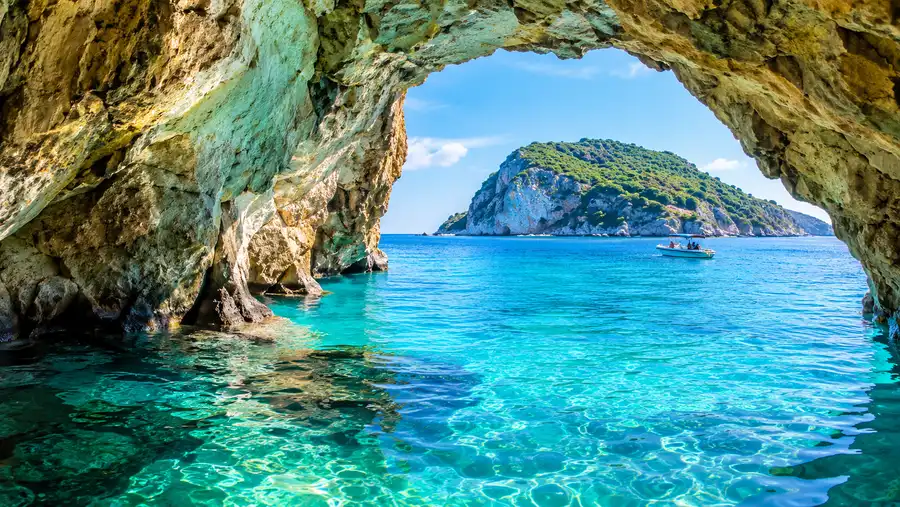
Timing alters this experience entirely. In July and August, Laganas Bay fills up with motor traffic by 10:30 AM. Dozens of small boats buzz back and forth, generating chop and churning the water near the cave mouths. The morning hours between 8:00 AM and 10:00 AM offer completely flat water, quiet shores, and low sunlight that angles directly into the cave mouth, illuminating the sandy bottom.
The regional wind pattern in the southern Ionian follows a predictable rhythm during midsummer. Mornings are calm, with glassy seas and barely a whisper of air. Around 1:00 PM or 2:00 PM, the local thermal breeze, known as the maistros, begins to blow from the northwest. While Marathonisi is somewhat sheltered by the high ridges of Mount Skopos and the Keri headland, the southern cliffside where the caves sit can develop an uncomfortable rolling swell by mid-afternoon. Trying to swim into a narrow cave mouth while swells lift and drop you two feet against sharp barnacles is neither safe nor fun.
- Waterproof dry bag: keeps your car keys, cash, and phone safe from water sloshing over the gunwales of small motorboats.
- Full snorkeling kit: renting gear locally often yields leaky masks, so bringing your own mask and fins ensures comfortable cave swimming.
- Ample drinking water: the island has zero running water, no shade trees, and no shops, meaning you need at least two liters per person on hot days.
- Sturdy water shoes: the beach near the caves is comprised of jagged limestone rubble and smooth white pebbles that hurt bare feet.
If you head south past Marathonisi after visiting the caves, the coast gets dramatic quickly. Sheer white cliffs rise hundreds of meters straight up from deep water, leading down to the iconic twin stacks that we detail in our guide on Mizithres Rocks viewpoints and boat trips. Making a combined loop that takes in Marathonisi early, swings past the sea caves, and finishes under those cliffs makes for an incredible four-hour morning run.
Frequently Asked Questions about marathonisi cave
Can you swim inside Marathonisi cave safely?
Yes, swimming inside the main cavern is generally safe during the morning when sea conditions are calm. Avoid swimming into the narrow chambers if an afternoon swell is running, as waves can push you against sharp limestone rocks and sea urchins along the perimeter walls.
Do you need a boat license to drive yourself to Marathonisi?
No license is required for standard rental motorboats equipped with engines up to 30 horsepower. The boat rental staff in Limni Keri or Laganas will provide basic safety instructions, explain park zones, and demonstrate how to drop anchor before you depart.
Are there loggerhead turtles inside the Marathonisi caves?
Turtles rarely enter the interior of the caves because there is no food or sunlight inside. However, they frequently feed and rest in the open water and seagrass beds located just outside the cave entrances along the southern edge of Marathonisi.
Is there an entrance fee to visit Marathonisi Island?
There is no entrance fee to step onto the allowed sections of the beach or to swim in the waters around the caves. Your only expense is the boat rental, water taxi ticket, or organized excursion fee required to reach the island.
Quick Reference
- Location: Laganas Bay, southern Zakynthos
- Boat rental cost: roughly €80 to €140 plus fuel
- Best visiting hours: 8:00 AM to 10:30 AM
- Main feature: large limestone sea cave with blue water
- Island status: uninhabited national marine park zone
Book your keri caves experience:
The Bottom Line
Visiting Marathonisi is one of those trips that rewards people who wake up an hour earlier than everyone else. Renting a small 30hp boat from the quiet harbor at Limni Keri, motoring out across the glassy bay before the tour groups arrive, and floating inside the cool blue light of the sea cavern feels like discovering an entirely different island. Treat the park rules with the respect they deserve, leave the turtles alone when they surface to breathe, and make sure you explore the wild cliffside before heading back to the mainland for lunch.
Read more about keri caves.